Introduction
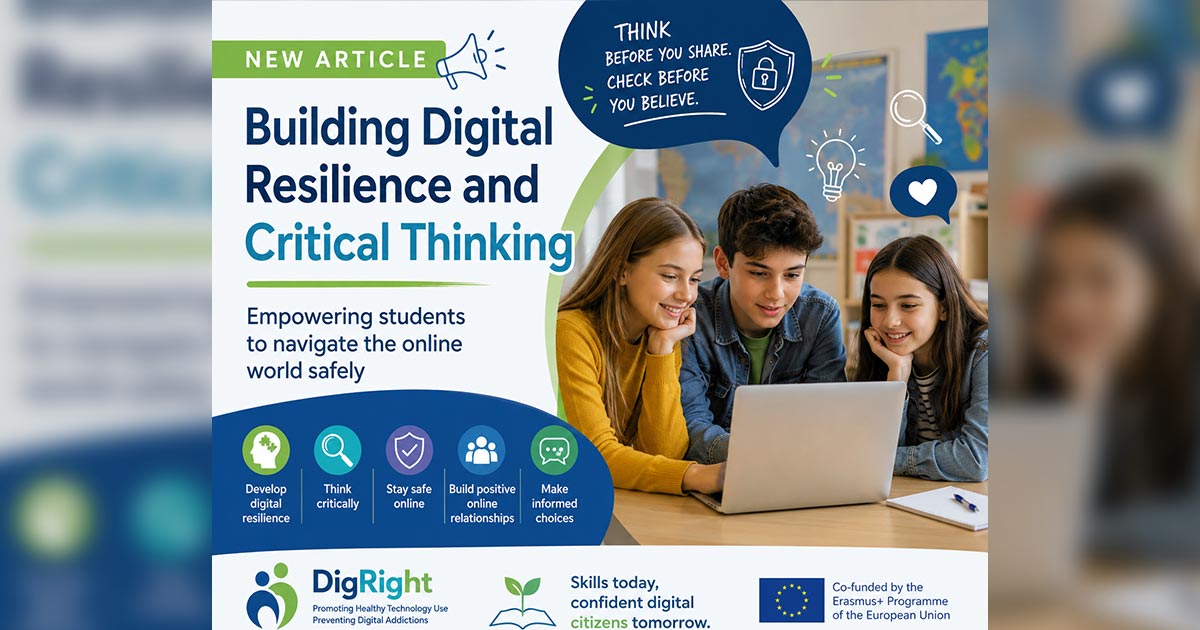
Today’s digital landscape presents young people with unprecedented opportunities but also new challenges, including misinformation, cyber risks, algorithm-driven environments, and increasing social pressures. This article shifts attention toward solutions—specifically, developing digital resilience and critical thinking among students.
Rather than relying exclusively on restricting technology use, schools increasingly recognise the importance of helping students develop the knowledge, attitudes, and skills needed to navigate digital environments safely and responsibly. Supporting students to become reflective and informed users of technology is becoming an educational priority.
Understanding Digital Resilience
Digital resilience refers to the ability to adapt positively to challenges, risks, and disruptions encountered in digital environments (World Education & Jobs for the Future, 2023). It includes awareness, confidence, flexibility, and problem-solving abilities that enable individuals to use technology safely and effectively.
Digital resilience extends beyond technical competence. It involves developing the capacity to respond appropriately to privacy concerns, misinformation, online aggression, and rapidly evolving digital environments (World Education & Jobs for the Future, 2023). Recent educational research highlights that digital resilience supports students’ self-efficacy and helps them become active and informed participants in society (Lee & Hancock, 2023).
In school settings, digital resilience is increasingly viewed as an essential developmental competence rather than an optional digital skill.
Why Critical Thinking and Media Literacy Matter
Young people are exposed to an unprecedented volume of information every day. In this context, digital media literacy and critical thinking have become fundamental competencies for personal wellbeing, safety, and informed participation in society (European Commission, 2022).
Media literacy helps students question online content instead of consuming it passively. Students learn to evaluate sources, identify persuasive techniques, recognise misinformation, and make evidence-based decisions (Sobel, 2024).
Developing these competencies is particularly important because digital environments often encourage rapid reactions and emotional responses. Teaching students to pause, verify information, evaluate sources, and reflect before sharing content strengthens their ability to participate responsibly and critically in digital environments (European Commission, 2022).
Research also suggests that media literacy interventions can positively influence attitudes and behaviours in areas related to wellbeing, decision-making, and social interaction (Sobel, 2024).
Educational Interventions That Make a Difference
Evidence increasingly shows that educational interventions can strengthen students’ ability to manage digital challenges.
Lee and Hancock (2023) implemented a classroom-based intervention with 566 elementary school students and found significant improvements in students’ digital skills, confidence in managing technology, willingness to seek help from trusted adults, and intentions to support peers online.
The findings suggest that structured educational approaches can help students:
- evaluate online information more critically;
- respond constructively to digital challenges;
- strengthen self-confidence;
- build healthier online relationships.
These results support the idea that prevention of problematic technology use should focus on developing competencies rather than restricting access.
The Role of Schools and Teachers
Schools play an essential role in helping students develop healthier digital habits and stronger digital resilience.
According to Better Internet for Kids (n.d.), educators contribute not only through direct teaching but also by modelling responsible technology use and encouraging students to reflect critically on their online experiences.
Teachers can support students by:
- integrating media literacy across subjects;
- discussing real-life digital scenarios;
- encouraging respectful online communication;
- teaching cybersecurity awareness;
- promoting reflection on digital habits.
Educational environments also create opportunities for students to challenge assumptions and discuss how online experiences shape values, attitudes, and behaviours (Better Internet for Kids, n.d.).
Building Digital Competence for Long-Term Success
Long-term solutions require developing broader digital competence.
According to UNESCO-UNEVOC (2024), digital competence frameworks define the knowledge, skills, and attitudes individuals need to participate effectively and responsibly in increasingly digital societies.
These frameworks move beyond technical abilities and include critical thinking, safe online behaviour, ethical participation, communication, and responsible decision-making.
Developing digital competence means helping students become active rather than passive users of technology. Students should learn how to evaluate online information, understand how digital platforms influence attention and behaviour, protect their privacy, and make informed choices about the content they consume and share.
Educational approaches that combine digital literacy with social and emotional learning can support students in developing greater awareness of their digital habits and stronger self-regulation skills.
Conclusion
Supporting students in becoming digitally resilient and critical thinkers represents an important educational response to contemporary digital challenges.
Preventing problematic technology use does not require eliminating digital tools from students’ lives. Instead, it requires helping young people develop the confidence, awareness, and critical thinking needed to navigate digital environments responsibly.
Schools can support this process by integrating media literacy into everyday teaching, creating opportunities for reflection and discussion, and promoting digital competence as an essential life skill.
By encouraging informed choices and healthier digital habits, education can empower students to become balanced and responsible digital citizens.
This approach aligns closely with the goals of the DigRight project, which aims to promote healthy technology use and prevent digital addictions through education, awareness, and the development of positive digital behaviours.
References
European Commission. (2022). A European strategy for a better internet for children (BIK+): Better internet for kids. Publications Office of the European Union.
Better Internet for Kids. (n.d.). Teaching online safety, media literacy and digital citizenship in primary and secondary schools.
Lee, A. Y., & Hancock, J. T. (2023). Developing digital resilience: An educational intervention improves elementary students’ response to digital challenges. Computers and Education Open, 5, 100144.
Sobel, T. (2024). Why media literacy now supports digital wellness and media literacy in health education. Media Literacy Now.
UNESCO-UNEVOC. (2024). Digital competence frameworks for teachers, learners and citizens.
World Education & Jobs for the Future. (2023). Defining digital skills and resilience.